ALAINPAUL WILL MOVE YOU BY ROB TENNENT AND DIVYA BALA
PHOTOGRAPHY: Rob Tennent
WORDS: Divya Bala
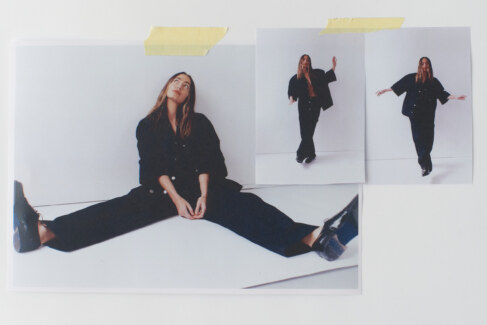
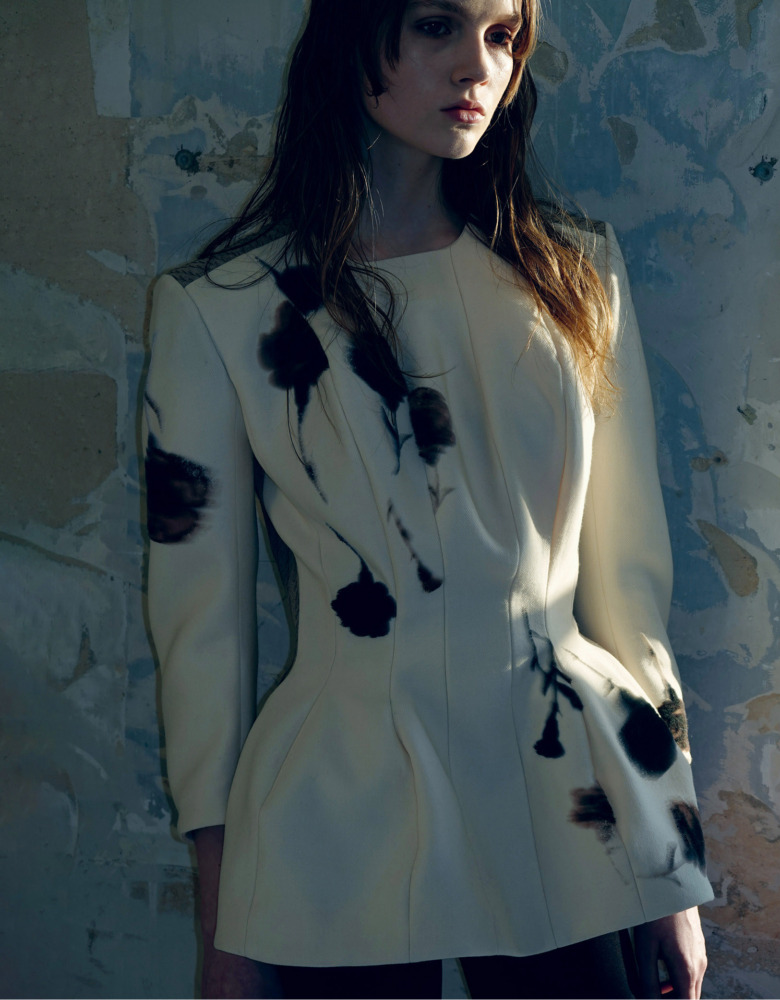
French designer and former ballet dancer Alain Paul reorients the body through tailoring, in a series of corrections akin to those given in a rehearsal studio. Take the cleverly pinched shoulder dart that creates a fold, mimicking a dancer’s prominent collarbone; together with tilted shoulder pads that appear to rotate the shoulders forward. They prompt your own to settle back and your chest to open. “It was so interesting how this posture emerged,” Paul recalls of his now-signature silhouette, which debuted in his first season. “When you wore the jacket, you felt your shoulders push back a little bit. It gave a certain allure,” he describes from his apartment in Paris, not far from the Alainpaul atelier in the 11th arrondissement. For the following collection, he disappeared the dart entirely, absorbing it into the collar, shoulder and sleeve, sharpening and extending their line. For his latest F/W26 collection, button placements travelled diagonally over the torso and elastic fastening systems cinched the waist from behind. Such is the ease with which Paul evolves from season to season, staying true to his foundational beliefs.
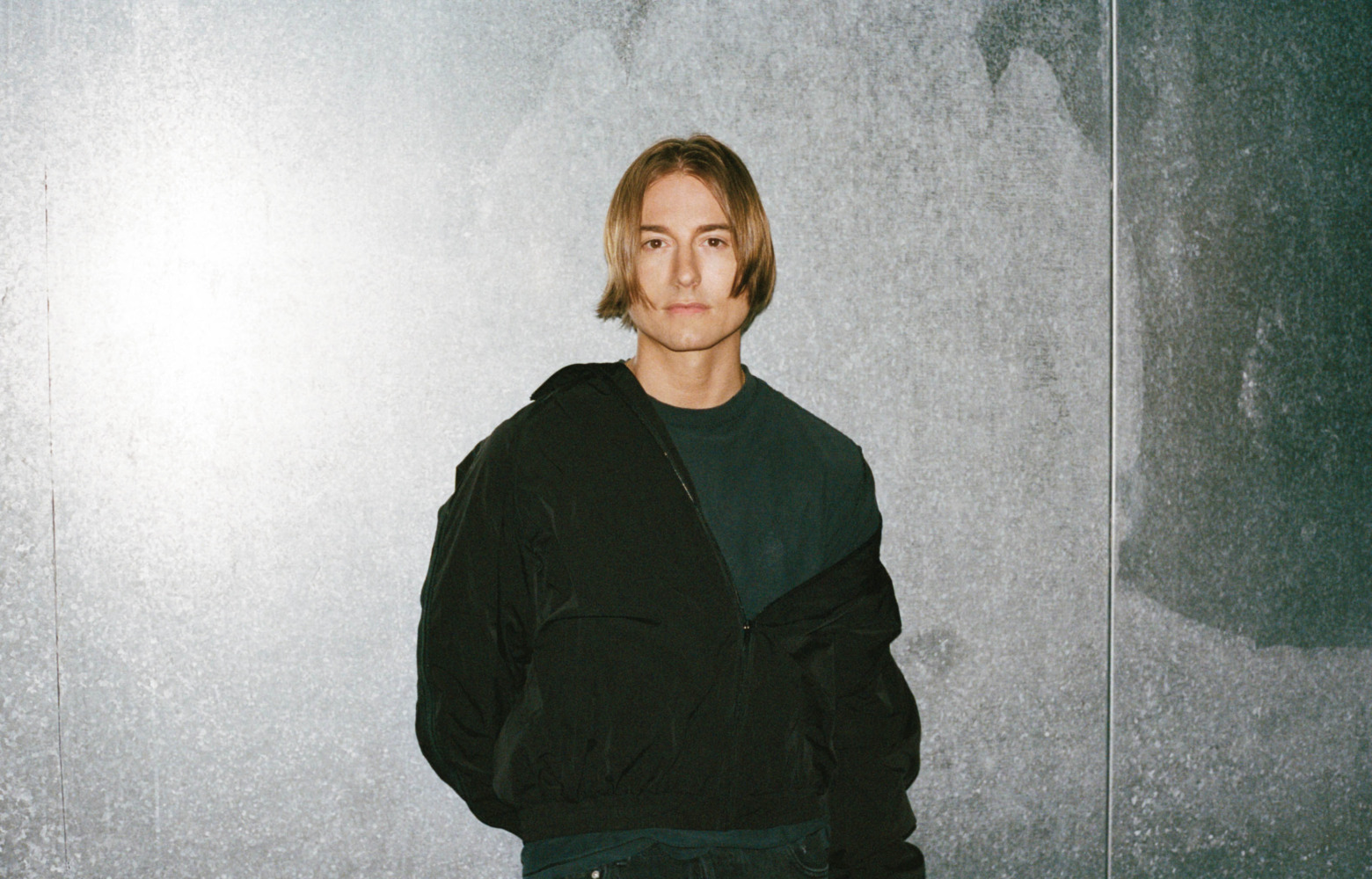
Paul’s approach echoes the masters; those deft at playing with posture and exaggerating movement – Cristóbal Balenciaga’s cocooning architecture, Issey Miyake’s kinetic pleats, Rei Kawakubo’s anatomical distortion. He lists his creative influences as far from fashion: choreographers Pina Bausch, Jiří Kylián, Merce Cunningham (after whom a signature shoe was named) and contemporary artists such as Francis Bacon, Erwin Wurm and Marina Abramović. Paul’s love of off-kilter fit comes from his background as a dancer and the practice of people watching. In the latest collection, fabrics are deliberately compressed and pleated into irregular reliefs that resemble creases and patinas left over time. “I find the spontaneity of the streets so interesting. I love how people just throw on something; how naturally people make pieces their own. Maybe it’s badly adjusted, slipping off the shoulder, one sleeve pushed up… Alainpaul is not just about dance clothes; it’s also how people live in clothes.”
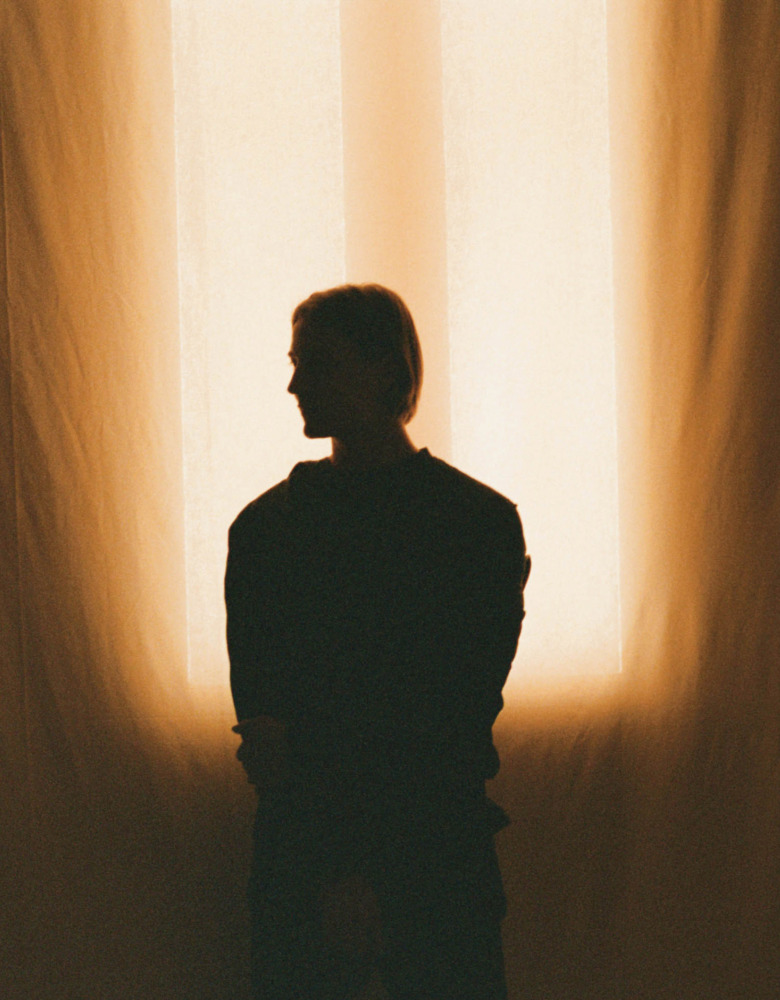
Born in Hong Kong in 1989, Paul moved to France as a child and entered the École Nationale de Danse de Marseille at the age of eight. A decade later, he traded the barre for the cutting table, studying fashion in Paris before joining Demna at Vetements during the collective’s formative years. From there came an invitation from Virgil Abloh into his studio at Louis Vuitton menswear. At the time, Paul’s husband and business partner, Luis Philippe, was freelancing for Balenciaga and Alaïa and collecting clothes. The two had longheld designs on their own project but it wasn’t until Abloh passed that Paul had a realisation of the fleeting nature of life, and Alainpaul was launched two years later in 2023. Their debut Paris Fashion Week presentation at the Théâtre du Châtelet secured 25 retailers almost immediately – quite unheard of – providing key momentum for a young house that has since won the Special Prize at ANDAM in 2025 as well as being a finalist for the LVMH Prize the same year. On the cover of her fourth album, Lux, Rosalía wore Alainpaul’s monastic-meets-straight-jacket creation, complete with wimple. “I think people respond to the sincerity of the project,” explains Paul, when asked about the brand’s preternatural success. “Even if they don’t come from a dance background, they connect with the emotion, movement and humanity behind the clothes.”
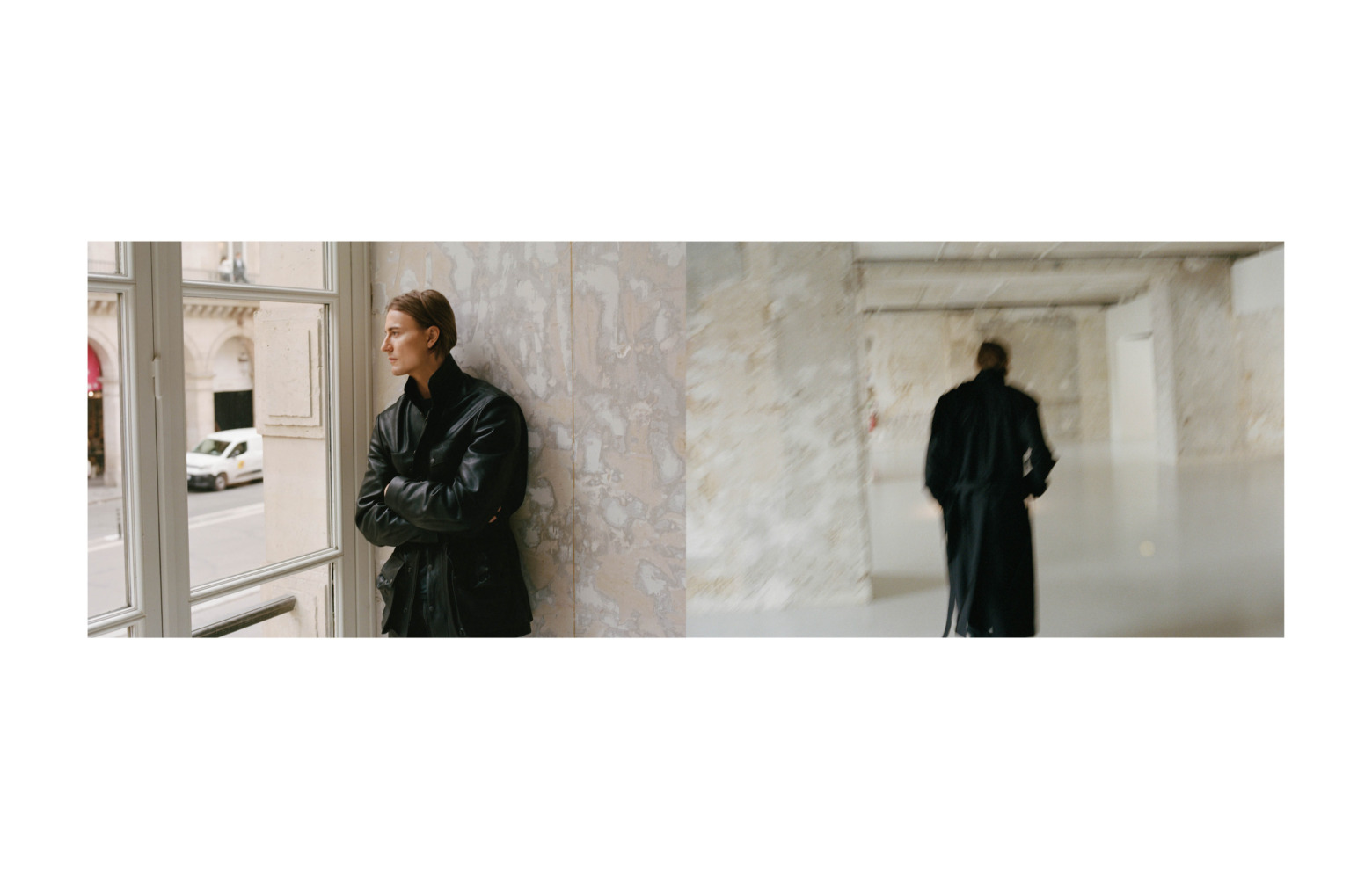
The first thing Paul ever sewed was the crossed elastics on his ballet slippers, taught by his mother when he was eight. Every dancer adjusts them differently, tweaking the fit to their own foot and arch. Today, that same elastic survives as the embossed label stitched into every Alainpaul garment, and elastic fastenings and ballet-derived closures feature throughout collections. “Dance and choreography are the subconscious of the brand,” he says. “It influences everything, from the way we cut a shoulder to the way we conceive a collection or a show. It taught me to think about posture, movement and discipline, but also about emotion and performance.”
Paul also thinks in garment systems rather than individual pieces. Drawing on the layered functionality of rehearsal dress, he collapses separate garments into singular constructions. Three tank tops become one; the draped collar of a shirt is absorbed into the tailoring of a jacket. For one S/S25 dress, he left one side of the pattern untouched while stretching the other by almost a metre beyond its original dimensions before being cut. Once the garment was put on the body, the construction resolved. The armhole slipped down to become a cuff, and lifting the arm created the illusion of a body caught between successive movements. Reminiscent of the chronophotographs of Etienne-Jules Marey, the finished silhouette appears extruded from movement.
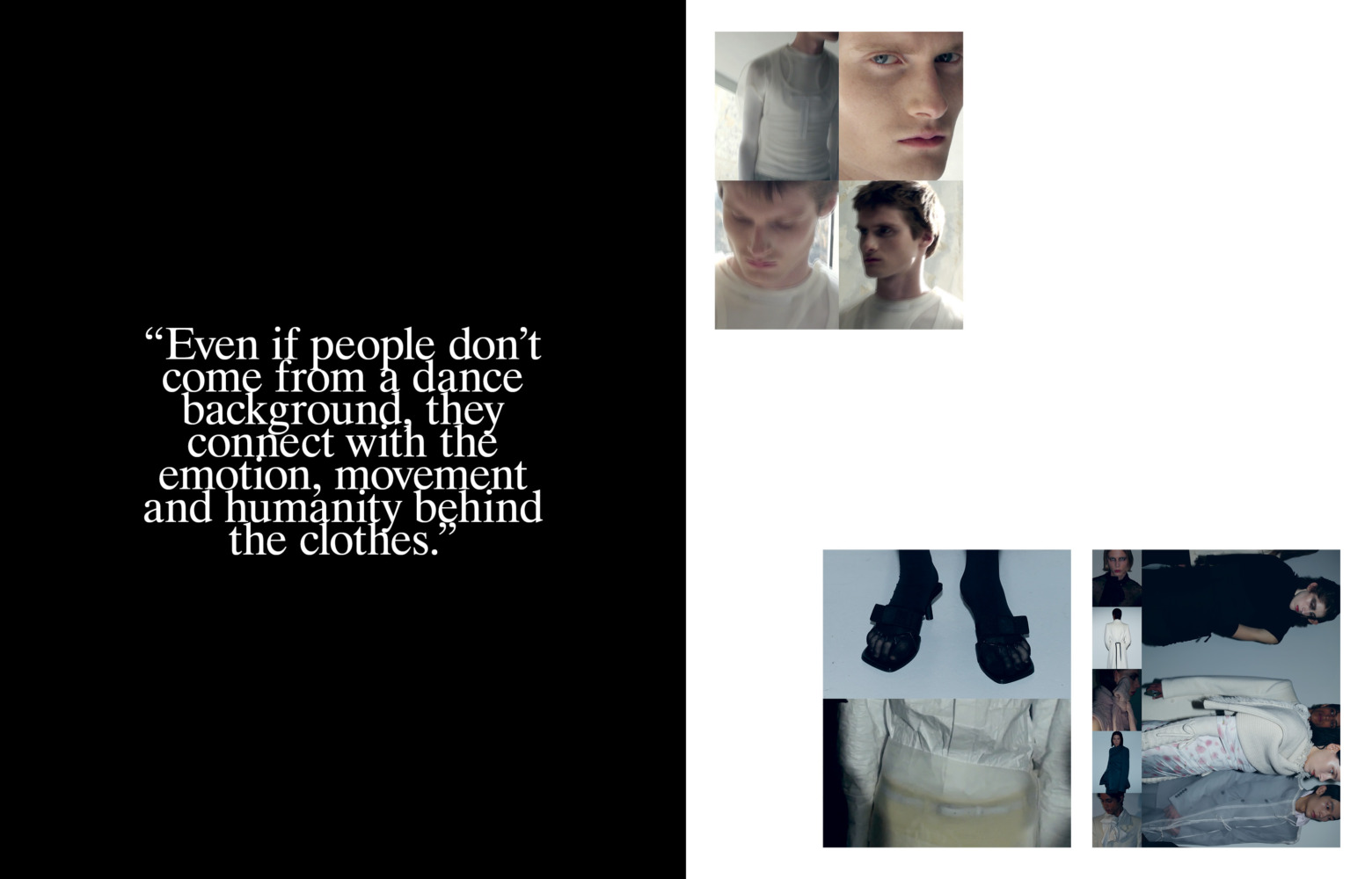
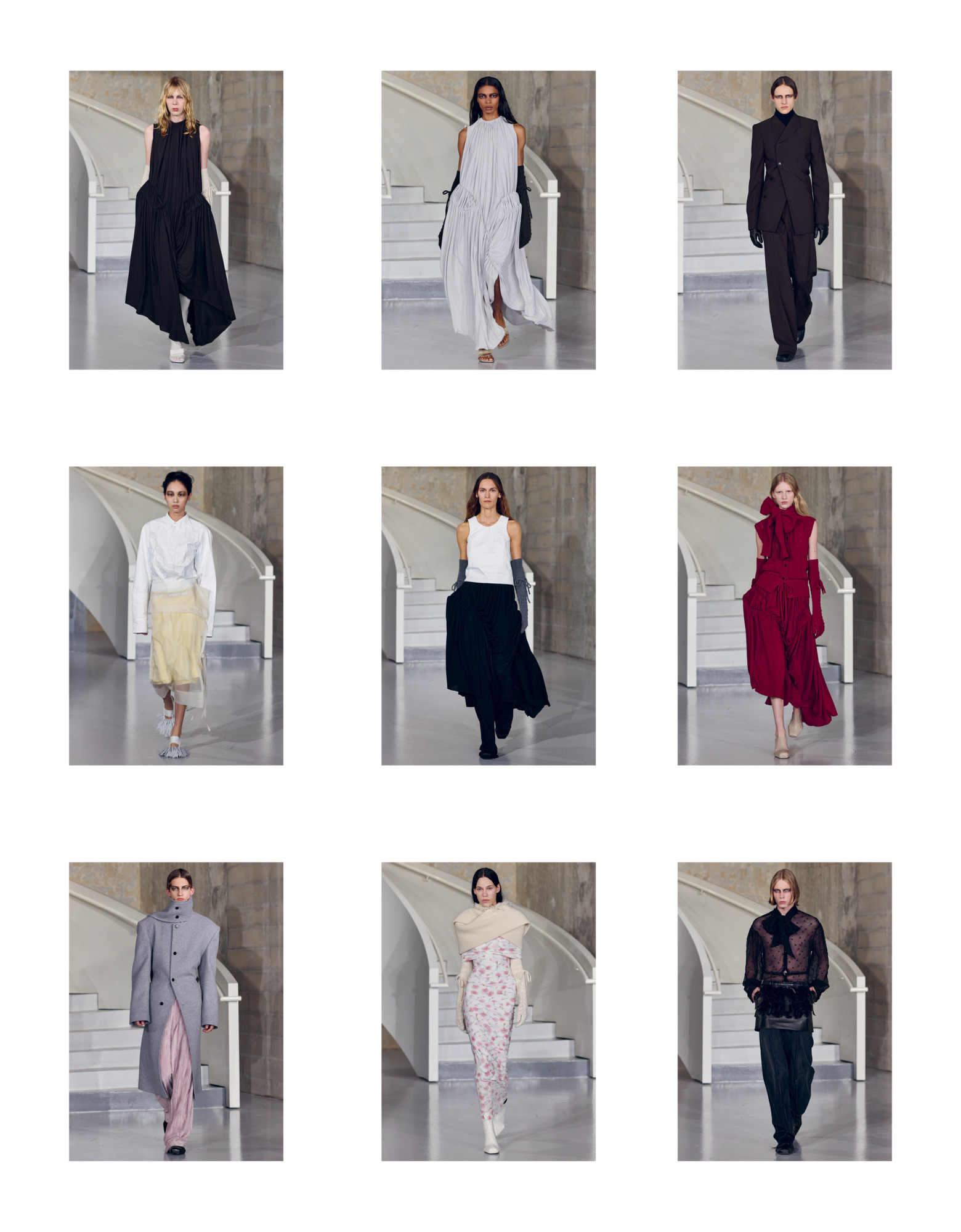
For the Opéra National de Paris Contrastes program in December 2025, Alainpaul created its first contemporary ballet costumes for Imre and Marne van Opstal’s new piece, Drift Wood. In March this year, at the Musée des Arts Décoratifs, Alainpaul pre – sented F/W26, entitled Répertoire (each collection is named as part of an unfolding performance journey: La Première, Deuxième Acte or Second Act, Impro, Performer, The Audition). The label had been invited to delve into the museum’s archives – specifically 17th- and 18th-century dress – and the designer found himself conducting his own archive. The collaboration became an unexpected retrospective – an opportunity to distil the brand’s visual codes after six collections. White gloves, the kind worn when handling fragile museum objects, were placed on every seat at the runway presentation. The opening looks were encased in gauzy silk organza, evoking the protective covers that shield garments in an archive between exhibitions. “We asked ourselves: what are our codes?” he says. “What can we bring back that’s still new?” And so, dance, rehearsal dressing, displaced tailoring, elastic fastenings and sculptural shoulders all returned.
Eighteenth-century corps à baleine corsets were knitted, boning exposed and suspended within a flexible construction that stretched with the wearer. Side pannier structures dissolved into fluid drapery; cascading floral motifs borrowed from the archives; and tapestries from the museum’s collection resurfaced as woven denim. The collection’s opening dress alone required several weeks and six or seven prototypes before its drape fell in the way Paul envisioned. “It still looks very minimal,” he says. “It doesn’t look like it’s trying so hard.” It was technical precision concealed beneath a seeming ease, like a perfectly executed ballet variation. “Even if I have a whole identity with dance and my background, I think what is part of me as well is the discipline I have with myself and with my work.”
Répertoire functions as Alainpaul’s first retrospective, a sum of the house’s defining gestures, and its designer is already looking beyond it. “I have many surprises coming,” Paul says when asked what comes next. “Right now, after six collections, I’ve shown you where I come from. Now I want to shift to where I want to go.”